Sunday, February 10, 2013

Ape attacks tiki bar customers

Hello everyone!
It's been a month since I last posted a blog from Key West. I apologize for not getting one out until this evening.
The launch of http://www.absolutelyamazingebooks.com, a new ebook publishing site, was the last item I reported to you. It's been doing well, with new book launches and the availability of the books on Kindle, Nook, IPads, and other devices. It won't be long until those books are available on print on demand.
I suggest you sign up on that website for automatic notification when a new book is offered on the site.
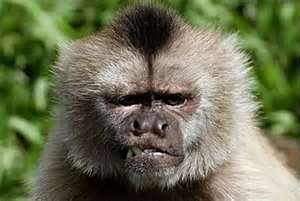
Here's a story I wrote for a friend of mine, Jeff Brister who lives with his lovely wife, Maryann, in Maryland.

Don’t Say … Vivisection 
 Copyright 2012, John Guerra

Jeff Brister, tooling down U.S. 1 in his convertible, spotted the tiki bar through a hole
in the mangroves on his right. He slowed, checked his rear-view mirror and executed a U-turn.
It had been an hour since he hit the Keys; it was time for a drink by the water. He drove back up the road and made a left into the narrow driveway leading to the bar. After meandering down a lane to a small, gravel parking lot, he parked his car and got out.
He scanned the small, white-sand beach and blue water of the Gulf of Mexico behind the tiki bar and silently congratulated himself for discovering the perfect spot to have a beer.
Comfy little place, authentic in its rough wood framing and uneven, thatched roof. The front and back of the building were wide open, with solid walls on each side providing support for the roof. He walked up three steps to the cement pad that made up the bar’s floor. High above, ceiling fans rotated slowly to keep the air circulating.
The place had a predictable look for the Keys: old lobster traps, dented and paint-scarred buoys and rusty boat tackle on the walls and ceiling. Jeff felt himself relax as his eyes wandered over the old license plates, fishing poles, fish nets, anchors, and other boatyard flotsam decorating the place.
Photos of patrons holding drinks and mugging for the camera, apparently required by some law in Florida, were stapled to the wooden posts, as were framed photos of giant fish that anglers in the
1940s and 1950s never dreamed wouldn’t be that big again. Glassware hung from racks above the bar, and the old-fashioned cash register was silent.
Surprised to find the place empty, Jeff also could not hail a bartender, or anyone else who might be on duty. He sat at the bar on a stool with torn, green vinyl padding. The only hint the place might be open for business was the fishing show playing on the TV screen above the bar. He yelled "Hello!" several times, hoping someone would appear to serve him a drink.
He waited, taking in the beautiful blue water spreading all the way to the horizon. Glancing around the bar again, he noticed a hand-written sign over the TV:
"Warning: Don’t Say Vivisection," the sign read. Someone had drawn the face of an angry-looking monkey under the strange message. He chuckled to himself. He read it again, this time his lips moved.as he made sure he was reading it correctly. "Warning: Don’t say vivisection." He shook his head, turned on his stool to see if anyone was behind him, and pondered the sign again. That had to be a joke. Jeff, who might never have a reason to say the word in the first place, decided to play along. Nothing else to do. Can’t get a damn drink.
He cleared his throat, looked around to see if anyone was watching, and went for it.
"Vivi –""Don’t do it, mister!" yelled a man who suddenly appeared at a doorway just behind Jeff.
Jeff caught fast movement to his right and almost fell off his stool. A small ape was running down the top of the bar toward him.
"Barry, no!" the bartender screamed.
The ape halted. It had a crest of hair sticking from the top of its head. Beneath a pronounced forehead a pair of small, black eyes glared at Jeff with deep agitation. The ape wasn’t much larger than a big tomcat, but it looked dangerous. Though it had stopped advancing on the bartender’s command, it swung its head from side to side and bounced on little black feet.
The bartender commanded the ape again.
"Barry … Baaaaary. Caaaaalm down, Barry."
The little ape charged Jeff again.
"Barry!! No!"
Something got through to Barry because he slid to a stop about three feet from Jeff, who had jumped up from his stool and turned to run.
"Don’t run, mister," the bartender said evenly. "He’s stopped attacking. If you run now, he’s going to be on you before you can make it to the exit."
Jeff held his ground. The ape was sitting on the bar where it halted. A very human look. Even the way its arm rested across its knee--like a Greek philosopher. Then Jeff saw the small, razor-sharp knife in the hominid’s tiny fist.
"Don’t stare at him! Drop your eyes!" the bartender urged.
Jeff wanted to break and run for his car, but he remembered that the car top was down. Knowing how fast that little bugger moved, Jeff pictured himself carved like a pumpkin behind his steering wheel. He would be dead before he got the car started.

But the ape had calmed; it made a "chukah-chuk," noise, turned and raised its ass. It plodded back to its spot behind the cash register at the end of the bar.
"Sorry mister, but that sign’s there for a reason," the bartender said as he walked past Jeff and took his spot behind the bar. "Barry’s OK, he’s a great ape but there’s only one thing that upsets him, that gets him riled up, and that’s the word we have the sign up for."
"What the hell was that about?" the visitor said, still standing.
"Look, I apologize I wasn’t here when you came in," the skinny and weathered bartender said. He was missing a few bottom teeth. "What’ll you have?"
"A cold beer, please," was all Jeff could say.
The bartender pulled a draft beer and put it on the bar in front of his only customer. "This one’s on me for your … mishap."
"I’ll also have a shot of Wild Turkey 101 and a change of underwear," Jeff said, sitting down again.
"Ha ha! I hear that! My name’s Jimmy. Welcome to the Monkey’s Fist," he said, pouring the shot.
They shook hands across the bar.
"Jeff, and I’m pleased to meet you," he said. "I was at a seminar in Miami for a few days and decided to head down to Key West. Never been there." He tried to sound relaxed, but his eyes were trained on the cash register in case the monkey popped out from behind it.
"I gotta ask," Jeff continued, "what are you doing with an ape that’s not caged, or at least got a leash on it? And was that a knife in his hand? I mean, what the hell was that about?" He downed the Wild Turkey and took a sip of his beer. He wiped his mouth with the back of his arm and burped.
"I know how you feel right now, mister, but this is really Barry’s place," Jimmy said, hooking his thumb over his shoulder. "He was here first, long before me and my partner bought it. For years this bar was an empty shell under a leaky roof. There were weeds crawling up the side of the building and breaking through the walls. It’s hard to spot from the road now, but then it was completely hidden from sight by trees and shrubs, and a big, pile of junk. Barry was here then, and no one knows where he came from, except he’s a Barbary ape, the ones you see running up and down the face of the Rock of Gibraltar in Europe. He’s an old-world ape."
"With an inner-city attitude," Jeff added.
"That’s for sure. When me and my partner bought this little tag of shoreline, we had to
cut the Tiki bar out from under the vines and trees. It’s been here since the1930s but had
been abandoned. Barry was using the place as his home. It was perfect shelter for him because no one knew it was here. Also, he could climb inside the rafters when it rained and the yard had the avocado, Key lime, and star fruit trees for him to eat. And I guess he found plenty of food, because as you can see, he’s strong. But he had to be lonely all that time.
"He took to us like anyone who’s been living alone for a long time. When we walked the property with the real estate agent in ‘70, he must have hidden because we didn’t see him and the realtor didn’t know anything about him. After we closed on the land, we started clearing the weeds, vines and junk from around the yard, and that’s when Barry introduced himself. Made us jump. He just dropped to the ground from the top of the rafters and stood erect before us, rocking side to side."
"No, kidding!" Jeff said. This was getting good.
"He really is a cool, little dude, too," Jimmy said.
As we brought in lumber and began to rebuild the place, he hung around, chattering, chattering, chattering. He was glad to be part of something, real glad to do some meaningful activity with a group. We were his new tribe, or troop, whatever monkey families are called."
"It seems pretty lonely around here still," Jeff said, motioning to the empty bar stools surrounding the bar.
"Stick around. People will start coming in soon. We’re a real community; this is a neighborhood place."
"Why the sign? I mean, how did you figure out that he’s sensitive to …
Jimmy raised his hand to halt Jeff from continuing.
"... that word?"
They both stole a look toward the cash register. No movement.
"Because of his … behavior, we got the feeling Barry had been a lab animal or at least heard about …" Jimmy paused, pointing to the sign, "… the experiments where they hurt and maimed his fellow primates. There’s an island out in the Gulf called Lois Key, and it used to be full of monkeys on the loose. It was owned by Bausch and Lomb, the makers of eyeglass lenses. We think Barry swam from there. They didn’t torture monkeys out there, but it’s where they kept them until they were plucked from there and taken to a lab somewhere on the mainland. We don’t know how Barry made the connection to the ... V-word."
"But how the hell does he understand the word vi …"
Barry’s head shot up; Jeff saw eyes sparkle in the shadows.
"Mister, you’ve got to be careful!" Jimmy the bartender scolded. "I can’t always control Barry. He doesn’t put up with any bullshit."
Jeff decided that he’d had enough of this place. He’s got to hit the road anyway. Key West was still a long drive from this psycho monkey and his stoned keeper.
"Margot! Right on time!" Jimmy yelled past Jeff’s shoulder. Jeff turned to see who the bartender was hailing.
Margot was one of the most bizarre women Jeff had ever seen. She wasn’t very tall, but she carried herself like a princess. She wore a long, flowered skirt and a green, Danskin top. A long, gold necklace hung almost to her knees and though her arms were thin and elegant, her hands were large with webs between her fingers. She had ridden a bicycle to the bar. Jeff felt a chill crawl up his spine.
"Jimmy, I’ve had a tough day," Margot sighed. "Give me the usual, but make it a double. Where’s Barry?"
"He’s right here, honey. Grab a stool."
"I’ll take another beer, too," Jeff told Jimmy.
The woman glanced at Jeff with disapproval but gave him a grudging smile. She sat four stools away.
As soon as her derriere hit the stool, the ape emerged from behind the register and padded her way as sweetly as can be toward the new arrival. He carried a small jar of mixed nuts in one hand, so he was ungainly on three paws. But he made to Margot without spilling a cashew.
"Bar-reeeeeee!" Margot squealed. The little ape put the bowl on the bar in front of her and stood, opening his arms wide. As Margot leaned forward, Jeff watched as the damn thing wrapped its arms around her neck and pecked her cheek with little curled lips. He made a pleasant chucking and clicking sound as they embraced. Jeff noticed with disgust that Margot’s webbed fingers were spread wide on Barry’s back. His head swum in nausea.
Jeff felt strangely ignored, however; neither the ape nor the web-fingered woman acted as if Jeff was present. Not to mention that Jeff got a blade with his greeting.
Jeff felt like an outsider. He was tempted to yell the "V" word right here, right now. Bring it on, you little bastard. He looked around the bar for a weapon, anything he could use to bean the little hominid next time he charged. But Barry did the unexpected, again. He released Margot and headed down the bar top toward Jeff.
Jeff froze in horror, but the ape seemed calm. It stopped in front of him, eyed Jeff calmly, then opened his arms for a hug.
"Hug him, for Chrissakes," Margot said. "If you want to be welcome here again, I’d do it."
"I met this sucker once already and it didn’t go so well," Jeff said, not taking his eyes off the ape as it stood before him with its arms open.
Jeff can smell Barry; it’s not a bad smell, but it’s the aroma of a little beast, like a raccoon or a
muskrat.
"Don’t hurt his feelings, Jeff," the bartender piped in. "If I was you, I’d hug him and fast."
"OK, OK," Jeff said as he put his arms around Barry. Barry did the same, but instead of kissing him on the cheek, Barry plants his lips on Jeff’s lips. He ambled off, leaving Jeff shocked and slightly disgusted. These things eat their own feces.
"That’s weird," Margot harrumphed. "He’s never done that before. Have you ever met
Barry before?"
"Nope," Jimmy jumped in again. "They had a little misunderstanding (he pointed to the
sign) and that’s Barry’s way of making friends again."
"Are you kidding? What the hell is your problem, dude?" the frog-handed woman asked.
"It’s Jeff."
"What?"
"My name is Jeff."
"Oh, well Jeff, you must not be very smart. That sign is up there for a reason. Why would
you do that when the sign says clearly that it’s dangerous to say what you said? I would
have taken you for smarter than that."
"Now that you mention it, I’ve got a question for you lady," Jeff snapped, pointing at the
sign. "That’s not a word most people pop off in normal conversation. Why the hell would
you have a sign that would create a dangerous situation for customers, not to mention the animal? That sign must cause more problems than it prevents."
"So you’re a smart guy, huh?" Margot sniffed. "It so happens that a lot of people know that word, with the sign up or not."
"What?"
"That’s right. I’ve seen it magazines, in animal rights ads, and I’ve even heard it on TV.
People use that word all the time, especially at animal rights rallies and stuff. The fact
that no one says the word around this bar with that sign up there is proof that it works."
Jeff shook his head and stared into his beer. He could not find a way to respond to this woman’s reasoning, or lack thereof. But he tried anyway.
"OK, I’ll humor you," he began. "Speaking of the TV, what happens when the news
comes on and they’re interviewing an animal rights activist or a veterinarian or a scientist
and they use that word on TV?"
"That’s our fourth TV," Jimmy piped in again.
Jeff laughed at both of them, a good long laugh at the stupidity of these people. An hour earlier,
he’d been driving down U.S. 1, heading to Key West for a much-anticipated visit and he’d somehow crossed into a simian Twilight Zone.
"You can’t be serious! Are you pulling my leg?" Jeff yelled.
"Nope, this one’s about ready to retire, too," the bartender said. He had the remote in his hands and switched from CNN to other channels until a Marlins game popped up.
As he watched the channels flip by, Jeff saw that the TV’s plastic casing was gouged; that the set’s been scratched, chipped and dented. He dared not ask, but did so anyway.
"Did Barry do that to the TV?" Jeff asked Jimmy. "Because there was a show on discussing the V-word?"
"Yep. About three months ago. Luckily I got the remote and turned it off before Barry
could smash the tube."
Jeff decided to order another beer and to drink it in silence. He would not engage these people further. No monkey, no bartender, absolutely no Margot.
More people arrived as the afternoon wore into evening, and before Jeff knew it, he was among a lively crowd and Barry’s no longer behind the register all the time. He’s fully engaged, hugging customers, lugging bar snacks, and walking around in confidence.
No one, absolutely no one, asked about the sign above the TV. As long as that subject was never raised, people had a chance, Jeff mused.
Jeff left the bar as sunset began and turned his car south on U.S. 1, headed to Key West. He thought about Barry and what he'd witnessed. That place had once been Barry's quiet home. Once humans bought it and began to change it, there was nothing he could do to stop them from opening a bar. Now, he was trying to go along to get along, exploding whenever someone read the dreaded word out loud. He was clearly unhappy. An idea began to form in Jeff's head: He would return and rescue Barry from the stupid bartender who didn't know that Barry was stuck. Jeff would give Barry his home back and make sure he never heard the V-word again.
That, dear reader, is a story for another day.
 

Thursday, January 10, 2013

"Maddie's Gone "


The amazing story of a lost dog in Key West

The dog to the right will become very familiar to readers in this nation in the next two weeks. The dog's name is Maddie, and she became famous in Key West four years ago after she jumped out of the back of a pickup truck in Old Town and chased a chicken under a house. The owner got out and looked for her, but the dog never emerged from under the house, which is near the Key West Bight. Puzzled, the owner launched a search that lasted for several weeks and suffered the fear and sadness that engulfs pet owners when their loved ones disappear. Yet the dog hadn't gone anywhere. When running into the dark, the dog fell into a cistern that was used to collect rainwater in the days before Key West had indoor plumbing, or "city water" as old-timers put it.
The dog was in that cistern, trapped in a place where no one could see her, where no one could hear her entreaties for help. Her owners put up flyers all over town that cried out, "Maddie's Gone!"
 I kept seeing that flyer and an idea for a novel began to form in my mind. What goes on in a dog's mind when it is trapped, when hope runs out? Does it think of its owner? What kinds of terror does it create for the animal? What is the spiritual link between pets and their owners? There is one, you know.
Thus, my first novel was born (by the way, because this is my blog, please forgive me if I give myself free advertising--but several editors who have read it say it's great).
The book is much more than about Maddie's plight, by the way. The human characters, which include Julia, Maddie's owner; Jim, the sometimes homeless troublemaker; Julia's sick and sadistic neighbor; and a cast of other Key West people (all fictional) search for the dog, but with different motives. The offer of a reward for Maddie's safe return creates a collision between characters that leads to murder, betrayal, and other untoward behavior. The cover may look innocent, but trust me, this is about adults behaving badly.
Maddie's Gone is nine chapters long; between each chapter, however, is a self-contained short story in which Maddie makes a cameo appearance. In "Honor Student," a Key West High School senior struggles to protect her little sister from her own boyfriend who is acting inappropriately, to say the least.
In "Dying Declaration," an old man on his death bed recounts JFK's visit to Key West in 1962; he tells his young nephews of his discovery during JFK's Key West visit that foretold of the slaughter in Dealy Plaza a year later. "Manny's Story" is a salute to shrimpers and fishermen of Key West in the 1940s. Manny, an old shrimp captain, describes to a younger man visiting the city how his young wife met her end in the Gulf of Mexico so many years ago.
Maddie shows up briefly in each of the short stories.  She walks down the street and into a scene in one story; in another short story, a homeless woman sees the "Maddie's Gone" poster at the Kennedy Drive baseball fields and embarks on a plan that ends miserably. Without giving away the whole book, the short stories carry the main tale of Maddie forward and in the end, the various plots come together in what I've been told is a great and satisfying ending.
So: Here's the pitch: As readers of my blog, I'm hoping you'll buy the book! It's not self-published, which means my publisher has vetted it (sorry about the pun on pets) and has declared it worthy of his stable of ebooks at http://www.absolutelyamazingebooks.com. Once you get to the site, go to "New Titles" in the menu bar at the top and click on "Maddie's Gone." The book is $2.99 and is downloadable on the various readers.
Now, a word about Absolutelyamazingebooks.com. It's the brainchild of Shirrel Rhoades, a pulisher for the past 40 years who wants to launch new writers from around the nation, though he also sells books by established Key West writers like Tom Corcoran, Michael Haskins, Brewster Chamberlin, William R. Burkett, Jr., Lucy Burdette, Jessica Argyle, and others.
He publishes mystery/thrillers. romance, science fiction, poetry, biographies, comedy, self-help books, short story collections ... you  name it.
He also has a great collection of science fiction titles from the 1930s (very cool) as well as a ton of other great ttles by great authors, including himself.
It went live today (Thursday) and will be very successful.
At any rate, I sure hope you'll buy my book; Maddie will appreciate it (if she's still around, that is).
This is a story that will inhabit your heart.

Thanks! Next week, it's back to my normal writing about dinosaurs in the Congo and stuff like that.

--John Guerra


Saturday, December 15, 2012

The age they were stilled

Kindergartners watch death delivered


When I think about the age of the kids shot to death in the Connecticut school, I tried to remember how new and strange the world seemed to me at that age. Adults staring down the barrel of a gun would be understandably frozen and confused, so how can a little kid understand why someone would execute other kids?
I reviewed my kindergarten year and what it was like for me in an attempt to understand the mental state of the poor kids in Connecticut.
I was a kindergartner in Rockville, Md. in 1963.
Rockville at the time was a small town on the road between Washington, D.C., and the mountains of western Maryland. The Cape Cod-style home my family lived in cost $13,000. The streets in my neighborhood were given World War II names because the homes on those streets were built with GI Bill loans. For instance, I lived on Crawford Drive, which was near Iwo Jima, Halsey, Ardennes, Nimitz, and Okinawa drives.
My mother was a landscape architect who designed many of the public parks in Rockville; my father taught piano in area homes. My job was to attend kindergarten, which I loved. We walked to school, my friends and I, waiting on the grass for the school safety guards to wave us across.
One evening, after the sun set and the darkness overtook the world, I watched with my family and neighbors from a hill as a blue-red vapor burst like a water balloon high in the heavens, then drifted silently over our town. The beautiful spray of color on the edge of space spooked me, because earlier that day Jean Dixon had predicted the world was to end the next morning. The light show was not the end of the world, as I feared it was. My father had done his best to calm me at bedtime, promising that the world was not going to explode. I spent a restless night until I finally drifted off to sleep. The next morning I awoke to a beautiful morning and ran in my parents' bed room, yelling "The world didn't end! The world didn't end!"
The Washington Post  also reported that the high-altitude explosion was Goddard Space Flight Center doing some weather experiments as part of the space program.
An old man would bring a pony in a horse trailer to our neighborhood so each kid could be photographed sitting on the poor beast. He was a kind, old man, and to a kindergartner, the pony was a romantic steed pulled from the wild herds of Montana.
The cowboy hat was provided but had to be returned to the old man after the photo was taken.
I remember hearing about a boy who lived across town who had killed his own parents; I was 5 and it was the first time I had heard of such a thing. The boy was put in Chestnut Lodge, an exclusive sanitarium for the mentally ill not far from our home. Who could kill their own parents? I pondered that in my little mind for a long time.
That also was the year that I learned what it was like to be shamed in front of a crowd. In kindergarten, each of the kids got a chance to care for some mice and guinea pigs in glass terrariums in the back of the classroom. During my day to feed and water the animals, I reached in with a bowl of water for the mice. One of the mice ran up my arm and I reacted, yanking my arm out and slamming the little gate on its neck, killing it instantly.
The other kids saw it happen and watched the mouse die. I remember them reacting, "John killed the mouse. John killed it!" I cried and bawled, explaining in vain that I had not meant to kill the mouse.
According to a counselor I told this to recently, to this day I cannot stand to be accused of doing something wrong if I am innocent. That I feel it necessary to explain myself all the time. That explaining myself makes people think I've done something wrong.
Hmmmmm ...
This is what it is like to be a kindergartner. Big world, the family its protective center, life lessons coming from every direction, fast and furious.
I remember the voice coming from the square, wooden public address speaker on the classroom wall above the chalkboard one November afternoon. The voice cancelled the school day and sent us home. On the walk home on those World War II streets, older students were saying the president was hurt. I followed the crush of students toward my home as the crossing guards hurried us across tiny intersections. When I got home, my mother was in the living room, crying as she watched the news from Dallas on television.
I remembered my parents talking about the president around the dinner table many times, and from their discussions I sensed the man was more powerful, more important than they were in the scheme of things. I had no real idea of what the president was, but his picture also hung on classroom walls and I knew if someone could hurt someone more powerful than my parents, then someone could hurt my parents. And me. It was the violence in Dallas, not the young man's killing of his parents in Rockville or the death of the mouse that turned my world into a very dangerous place. It was the assassination and the way the nation stopped.
I cannot imagine how the youngsters who watched the bad man kill their friends will put such evil as they grow into adults. Parents may try to calm their kids by holding them close, but the kinds understand that this crazy man was able to get to them when their parents weren't around. The gunman was more powerful than their parents. From now on, all adults will have the capacity to shoot them.
This is what kindergartners think about at times like this. At this age, they are spending entire days away from home for the first time. There is only home and school. Now that school is unsafe, they may only feel safe at home. I believe the result will be children with a diminished capacity for enjoying the world at large and the people in it. These children will need some very special help--as some of us have needed.
I also was struck by the way two kids rose to heroic action. One youngster told his classmates as the gunfire went on in an adjacent classroom that he would go and stop the man because he had taken karate lessons. Another youngster led his classmates out of the building when the shooting stopped. Unbelievable kids, I tell you.
By the way, school shootings are not new.
There was one in the news a year after I graduated kindergarten.
A school massacre occurred in a Catholic elementary school in the suburb of Volkhoven in Cologne, Germany, on June 11, 1964. Walter Seifert, born on June 11, 1922, killed eight students and two teachers with his handgun.

-- John Guerra

Tuesday, December 4, 2012

Giant sauropod alive in Africa?


The Congo's elusive brontosaur

By John L. Guerra

For thousands of years, tribes in the Congo have reported sighting a hippo-killing brontosaur they call "Mokele-mbembe."
This species of dinosaur lived during the Cretaceous period, which ended 65 million years ago when a large asteroid slammed the Earth near the Yucatan Peninsula, yet these giant plant eaters allegedly have found a way to survive in this remote part of the world. In fact, local fishermen build large fences to protect their catches from the beast.

So if dinosaurs have been gone for so long, why would villagers in the remote parts of the Congo River Basin fell trees, which they sharpen and sink into the river bottom to create a fence to keep a beast they called "Mokele-mbembe" from trashing their fishing grounds?
Consider this: the Smithsonian Institution took rumors of a dinosaur seriously enough to send a group of scientists to find it. As you'll read in a little bit, the expedition ended in tragedy.


Don't ask me, ask the natives
Is there a living dinosaur in the gigantic Congo River Basin, the enormous wetland system on the Equator in Africa.
The Congo River itself, which winds 2,900 miles through the Congo's and Zaire's thickest jungle, is surrounded by more than a million square miles of wetlands. It is an endless network of smaller rivers, lakes, and those wetlands, much of which has never been punched through by canoe. Which means the area is hot, wet, and judging by those 1940s dioramas of meat-eating triceratops I grew up staring at in the Museum of Natural History in Washington, D.C., the area is a perfect place to find brontosaurs.
Being a cryptozoologist, to write with any authority on the subject, I need only dig online to find people who have heard, and even seen, this "big-ass animal"--another technical term used by cryptozoologists.
I ran across a list of expeditions that have tried to find the creature and the results of their efforts. These lucky few have undertaken my dream trip.


The imprint is purported to be the footprint of a dinosaur that still lives in the Congo River Basin.


  • In 1776, a French missionary to the Congo, Abbé Lievain Bonaventure claimed to have seen enormous footprints in the region. The creature that left the prints was not witnessed, but Bonaventure wrote that it "must have been monstrous: the marks of the claws were noted on the ground, and these formed a print about three feet in circumference."
  • In 1909, Lt. Paul Gratz (of Germany) traveled to the Congo and heard Zambians speak of a creature known as the "Nsanga", which was said to inhabit the Lake Bangweulu region. Gratz described the creature as resembling a sauropod. This is one of the earliest references linking an area legend with dinosaurs, and has been argued to describe a Mokèlé-mbèmbé-like creature. In addition to hearing stories of the "Nsanga" Gratz was shown a hide which he was told belonged to the creature, while visiting Mbawala Island.
  • When on safari in the Congo in 1909, big-game hunter Carl Hagenbeck noted a lack of hippopotami in the river; his native guides informed him of a large hippo-killing creature that lived in Lake Bangweulu, part of the Congo River Basin ecosystem.

  •  In 1913, a German captain in the region, charged with conducting a census of German nationals living in Cameroon and Congo, wrote of how local tribes people described the creature:
"The animal is said to be of a brownish-gray color with a smooth skin, its size is approximately that of an elephant; at least that of a hippopotamus. It is said to have a long and very flexible neck and only one tooth but a very long one; some say it is a horn. A few spoke about a long, muscular tail like that of an alligator. Canoes coming near it are said to be doomed; the animal is said to attack the vessels at once and to kill the crews but without eating the bodies.
The creature is said to live in the caves that have been washed out by the river in the clay of its shores at sharp bends. It is said to climb the shores even at daytime in search of food; its diet is said to be entirely vegetable. This feature disagrees with a possible explanation as a myth. The preferred plant was shown to me, it is a kind of liana with large white blossoms, with a milky sap and apple-like fruits. At the Ssombo River I was shown a path said to have been made by this animal in order to get at its food. The path was fresh and there were plants of the described type nearby. But since there were too many tracks of elephants, hippos, and other large mammals it was impossible to make out a particular spoor with any amount of certainty."

  • Finally, my favorite--The Smithsonian Institution in 1919-1920 sent 32 men to explore the region and study its ecology. The museum understood the natives had spoken of a brontosaur-type creature and included inquiry into the animal into the overall expedition mission. The expedition's African guides found large, unexplained tracks along the bank of a river and later in a swamp the team heard mysterious roars, which had no resemblance with any known animal." However, the expedition was to end in tragedy. During a train-ride through a flooded area where an entire tribe was said to have seen the dinosaur, the locomotive suddenly derailed and turned over. Four team members were crushed to death under the cars and another half dozen seriously injured

Mysterious roars

I love the part about the mysterious roars while the group was camping. I wish I had heard that sucker out there in the jungle at night. That would make my life complete!
Over the next century, at least one explorer claims to have seen Mbembe, though the animal was badly wounded as it stumbled into the water and swam off. Another account has natives explaining that the dinosaur is not a physical thing, but a spirit that can change the course of the rivers. Expeditions in the modern age include TV crews and documentary producers.
Cryptozoology is great fun. It's interesting to think that isolated pockets of unexplored Earth contain lost populations of dinosaurs or large hominids like Big Foot, Yeti, and their cousins all over the world. When people laugh at the idea of unknown species of ape, I point to the Bonobos.

A new find in the Congo

Again, we must go to the Congo. Though chimpanzees were well-known north of the Congo River, rumors spoke of a group of two-legged creatures, much larger than chimps, that lived south of the Congo River. Locals told explorers that the creatures had head hair parted in the middle and that they walked on two legs much more often than chimps did.
In spite of extensive searches for the creature, it wasn't until 1928 that German anatomist Ernst Schwarz is credited with having discovered the bonobo. Because chimps can't swim, it is believed the Bonobos were kept to one side of the river, and for some reason developed as a separate species from their northern counterparts. Scientists believe there are now about 50,000 of the creatures left. Deforestation, of course, being the main culprit for the animal's position on the endangered species list.

 --John Guerra

Saturday, November 24, 2012

Secession possible, court once ruled

What American rebels should consider

By John L. Guerra

The White House may regret setting up the "We the People" feature on its website (whitehouse.gov). In addition to petitions asking Congress to designate the Tea Party a hate group or asking Hill lawmakers to demand Rwandan troops leave the Congo, 40 states have filed petitions to secede from the union.
Though secession historically has been a southern thing, in the wake of Obama's re-election, residents in northern and western states are seeking secession on the White House website, though I suspect it's more of a political statement than a real demand.
When this round of talk of splitting from the union began a few years ago, Texas Gov. Rick Perry was suggesting it might be the way to go for Texans. That was when he was addressing a Tea Party rally several years back; this week, however, governors are all telling their citizens that secession is not a good idea. After you read this analysis of secession 2013, you will understand why it's not a good idea.
A 2008 Zogby International poll revealed that 22 percent of Americans believed that "any state or region has the right to peaceably secede and become an independent republic." I found this an interesting indication that regardless of political party, Americans are still the rebels they always have been.

What is secession?

Secession is the declaration by a state that the Constitution of the United States, ratified in 1789, will no longer be recognized as the law of the land within its borders. It's a declaration that a state will no longer follow laws made in Washington (hence, federal laws) that hurt, hinder, or go against the best interests of a state and its residents.
Using 1860-61 as a model, your state Legislature would first vote to rescind the state's original ratification of the Constitution, which is what South Carolina did just before the War of Northern Aggression.
Then, your state's Washington delegation reads a declaration of secession in the wells of the U.S. House and Senate. Then your congressional delegation walks out, and not just ceremoniously, either. They are legally allowed to "moon" one or both houses as they exit. That's where the term "bicameral" comes from.
Once they get outside the Capitol Building, they get in their carriages and "haul-ass" south. Should this happen today, they will stop long enough to explain only to Fox News cameras why they're about to get in their carriages.


The South Carolina Washington delegation. Harper's Weekly followed the delegation around Capitol Hill just before Christmas 1860. The men walked the halls of the Capitol Building, informing congressional colleagues that the state would secede.


Here's how South Carolina, the only state with what I call the huevos to go first (December 1860), stated the vote in its general assembly:

"An ordinance to dissolve the union between the State of South Carolina and other States united with her under the compact entitled 'The Constitution of the United States of America.'

Here's the Texas secession petition filed on the White House website a few weeks ago.

"Given that the state of Texas maintains a balanced budget and is the 15th largest economy in the world, it is practically feasible for Texas to withdraw from the union, and to do so would protect its citizens' standard of living and re-secure their rights and liberties in accordance with the original ideas and beliefs of our founding fathers which are no longer being reflected by the federal government."

Whatever "no longer being reflected" means.

By the way, wouldn't Texas return to Mexican ownership if it left the union? That would make Texans illegal immigrants on their own land. Kind of what happened to the original Mexicans who were in "Texas" when it was stolen from Mexico. Border states will have to be careful with this pulling-out-of-the-union thing.

Who can secede?

Any state, county, town, or region--the Florida Keys, for instance--can declare its intention to break from its larger political parent. The real question is, who can secede successfully? Courts or voters can allow the breaking of neighborhoods or towns from taxation districts or allow them to detach themselves from city boundaries. When it comes to states, that's not been done. The one real drive for secession, in 1861, was beaten back with federal armies.
So the answer is: Any state can declare its intention to secede if it has reason enough. It's not illegal to declare one's intention. That's free speech.
I have not read each and every secession petition for the 40 states, but I am certain most of the signatures (Texas has tens of thousands of signatures) stem from anger at the deficit, the national healthcare law, Obama's nationality, and whatever else Karl Rove has accused the president and Democrats of doing. I do not belittle anyone's reasons for wanting to secede. If conservatives are angry, that's all that's necessary. The courts do not limit or define the reasons for seeking independence from the United States.
However, and laws are riddled with "howevers" (or are those proclamations?) the Supreme Court ruled unilateral secession unconstitutional, but suggests successful secession is possible through arms or with the consent of other states.
 Which brings us back to Texas, whose secession petition has been signed by 88,000 residents. If Massachusetts, Florida, California, and all the other states tell Texas they can go (not an impossibility, trust me) then who's to stop it?

Is secession allowed?

That's a silly question, isn't it? That's the best part of secession. It's a line states aren't allowed to cross. And that's exactly why they cross it.
Attempts at or aspirations of secession from the United States have been a feature of the country's politics since its birth. Some say states have a constitutional right to quit the union; Jefferson said it's an American responsibility to revolt, which I hold true, too. In the armed sense, I mean.
The one serious secession movement was defeated in the Civil War, of course. In 1860 and 1861, 11 of the fifteen southern states that enslaved human beings quit the U.S. and formed the Confederate States of America.
Though the CSA collapsed after April 1865, one of its sons successfully decapitated the federal government at Ford's Theater.

A look at secession 2013

What makes a secession successful is whether or not a state has a standing army of citizens that can beat back the U.S. military, which will most assuredly arrive in a matter of hours by federal highway system, air, and--if you are a coastal state, by Aegis cruiser or aircraft carrier.
Yet new powers given the president after 9-11 will add a new twist to any future mass secession of states from the union.
States, in fact, do have standing armies, which are euphemistically called "The National Guard." They are at the disposal of governors in case of natural disasters, rioting in urban settings, or in the case of Ohio in 1970, to quell university students who start throwing things. Can governors use the National Guard to protect its borders against an invading U.S. Army? I suppose the governor would have to first gauge the mood of his National Guard and whether its commander would back him. This sure is fun, isn't it? The height of journalism, describing what might happen in a situation that may never happen!

The Insurrection Act allows the president to use U.S. military personnel at the request of the State Legislature or Governor to suppress insurrections in states. What if governors refuse to use the National Guard on his own people, or in fact, uses the National Guard troops to uphold secession?
On the eve of the midterm elections in 2006, George W. Bush successfully got Congress to change the Posse Comitatus Act by granting the president the right to commandeer federal or even state National Guard Troops and use them inside the United States. Against taxpayers. Against civilians. Against you.
One of the stated reasons the prez can suspend civil liberties, detain, and interrogate citizens is to suppress, in a state, any insurrection, domestic violence, unlawful combination, or conspiracy. Those are my italics, by the way.
The Patriot Act also allows the president--the president--to arrest, detain, and interrogate (with methods up to, but not including, torture) and hold indefinitely in secret Americans or anyone else deemed part of a terrorist cause, attempt, plan, communication, or other perceived link to insurrection or terrorist groups.

OK, it's unpleasant, but we've now established that the president has tools in place to stop a state from seceding without an all-out civil war. If a state secedes and the governor won't use his own National Guard to quell that secession--he probably has agreed with his state's congressional delegation to secede (see South Carolina above)--then the president can phone the state's National Guard commander and order him to do it. Kind of a surgical civil war, in which insurrection is halted state by state, without having to call up Army divisions and trucking or shipping them by rail to the region in question.
There's something else that's changed since 1861: It's called the Northern Command (USNORTHCOM).
Whereas President Lincoln had his Army of the Potomac, the president now has this military force already in place. It is headquartered at Peterson Air Force Base in Colorado Springs, which few would argue is pretty close to the geographic center of the United States. Thanks again to George W. Bush, who formed the command in 2002 in response to 9-11. The command is "tasked with providing military support for civil authorities in the U.S., and protecting the territory and national interests of the United States within the contiguous U.S., including Alaska."
The creation of a new command (the Southern Command protects South America and the Caribbean; Central Command, Iraq, Middle East, and Southwest Asia; and the Pacific Command, which oversees India, China, the Pacific ridge and the eastern edge of Asia, Australia, and other parts) puts Americans right in the center of the Pentagon's military planning table. Genl. Charles H. Jacoby, the modern counterpart to Genl. Ulysses Grant, is in charge of USNORTHCOM; he would be in charge of using military force to pull any secessionist states back into the fold.
Unimaginable, folks, until the Northern Command was approved by Congress in a flurry of post-9/11 fear that many point to when they say Bin Laden won.
Let me dial this back down a bit. The U.S. military isn't about to roll into cities and towns to lay out barbed wire and water board citizens. Most of the Northern Command's mission is to control populations of Americans in times of extreme crisis. Here's what NORTHCOM thinks about:
The explosion of a small nuclear device in Chicago causes a mass exodus into the countryside from nearly every American city. Or a deadly disease outbreak causes a breakdown in social services, civilian authority, and other forms of societal collapse. You need troops to move large populations, set up large tent cities with plumbing, electricity, and kitchens; you need soldiers to manage refugee checkpoints, to ship in and distribute clothing, food, medicine, and to provide security in times of disruption. These are extremely unpleasant things to think about, but those are the kinds of things NORTHCOM plans for. The unstated idea in all this is that NORTHCOM has the legal authority and weapons to restore order within the borders of the United States. By the way, won't Southern governors love all those tanks rolling down their highways, with "Northern Command" graphics on their armor?

A quick thought: So what if a state secedes? It's not going anywhere. I think what really started the Civil War was South Carolina shore batteries firing on a federal fort in Charleston Harbor. If Texas secedes but doesn't fire on anyone or pass any laws that allow the eating of children, then why not just leave Texans alone, let them declare themselves independent and ignore them? I think that's what's happening anyway.

Other examples of secession

States aren't the only political entities to secede. In Maryland, the Eastern Shore has sought a split with Annapolis and the rest of the state on the Washington side of the Chesapeake Bay. Neighborhoods often seek to split from cities and towns. And cities seek separation from states.
Which returns us again to Texas. As so many Texans signed the secession petition this month, Austin said it wants to stay with the United States. What a great town, by the way. Great music, great food, great people, and educated? You better believe it. The city is begging the White House to let it stay with the union.
I love that city. Always have.

Monday, November 19, 2012

There must be a connection

6 degrees of separation: Car crashes linked to assassinations? 


By John L. Guerra

Two weeks before John F. Kennedy was killed in his car in Dallas, future First Lady Laura Bush killed a Texas man with her car.
Ten days after Democratic presidential candidate Bobby Kennedy was gunned down in Los Angeles, a woman was killed in Mitt Romney's car after he collided with a car driven by a Catholic priest.
It gets weirder. Mitt Romney was declared dead in that same crash, and his father, George Romney, was a presidential candidate on the Republican side while Bobby Kennedy was on the other side. Upon learning that his son was dead, George Romney called Bobby Kennedy's brother in law, Sargent Shriver, who was the American ambassador to France. He asked Shriver to confirm his son's status--something even Obama couldn't accomplish years later. 
As we all know, Mitt lived. Sort of.
Thirteen months later Sen. Ted Kennedy ran his car off the Chapaquiddick Ferry Bridge and left Mary Joe Kopechne in the water overnight.
These facts might make your head spin, but let me sort it all out.
In the First Lady's instance, it finally establishes a concrete link between Laura Bush and JFK's assassination.
As for Romney's crash, which occurred because as Romney himself said, "I was frightened of driving a car and had a sense of vulnerability that I had not experienced before," I can establish an even creepier connection. Because he is a Mormon and the man in the other car was a Catholic, the priest must have been drunk. Romney told C-Span interviewer Brian Lamb in 2006 that "the other fellow was drunk." As we all know, whether you are in France or Vietnam, it's never the fault of the rich guy.
There is no proof the priest was drunk. In fact, the French police did not accuse the priest of drinking and the priest, who is still alive, says he wasn't drunk.
By the way, and I find this very interesting: The French declared the youngster Mitt Romney dead in June 1968 after the car crash. Right there on the side of the road, in the grass, among several injured people, some of whom weren't moving. The local French guy in charge of the scene wrote "Il est mort" across Romney's passport. Romney told Lamb that his father, then-presidential candidate George Romney, read about his son's death in American newspapers (not). George Romney called Shriver (true story, according to the younger Romney) and asked him to check on his progeny, who had never been out of the United States. Shriver went to the hospital, talked to the young Romney (proving he was still alive) and called George Romney and the rest is history. The president of the Mormon mission and his wife were in the back seat. The wife of the Mormon leader was the one who died in the crash. You can see the new widower's sadness as he eats his meal in the hospital.

RIGHT HERE:


Now, we know that the late Teddy Kennedy had been drinking pretty heavily when he drove Miss Kopechne across the wooden bridge to drop her off at her hotel room. And he's a Catholic. See the connection?
There really isn't one. Alcohol and lunatics kill, regardless of religious affiliation.

Now, to the woman who has had to suffer endlessly because she is married to a buffoon.
Laura Bush was heading back into town with a girlfriend (they had been hanging out at an outdoor party-I wish these people would admit to being people) when she drove through an intersection.
Here's how a newspaper reported the incident.

"Driving her father’s brand new Chevy Impala on Nov. 6, 1963, Laura ran a stop sign on Farm Road 868 at 8:08 p.m. at 50 mph., plowing into a Corvair sedan driven by Michael Dutton Douglas, the high school’s track and football star, and according to some, a former beau of hers. The impact of the collision hurled Douglas’ car some 50 feet off the road, instantly killing him. Laura and her passenger, schoolmate Judy Dykes, were both treated at the local hospital for their own bruises. It was there she learned that Douglas had died of a broken neck."
I believe Laura Bush when she says she felt absolutely, sickeningly, horrifically, horrible about the young man's death. At the hospital, she could hear his mother weeping over her son on the other side of the emergency room curtain. It was a moment, she wrote in her biography, that changed her life and brought her tumbling into adulthood. I've always liked her and feel bad that she went through that nightmare--the accident, I mean. Not her marriage to what's-his-name.


Saturday, November 10, 2012

Notes on Election Day in Key West

Tip O'Neill said it: All politics is local

When Tip O'Neill, the big, affable politician from Boston, said "All politics is local," he might not have realized how layered in meaning the statement is. It means congressmen won't be re-elected unless they take care of their districts back home. Yes, you might fight for national bills in Congress, but you better pay attention to the folks where you live.
After last week's voting, I realized it means something else: As hundreds of millions of Americans, from Maine to San Diego and Seattle to South Florida, went to the polls to vote, I had the pleasure of seeing and talking to my neighbors at my precinct headquarters at the community swimming pool in Bahama Village. We have an active political base in Bahama Village, the main drag of which seems to be Petronia Street. The neighborhood is bounded on the south by Front Street to the community pool. The northern boundary of the village is the length of Duval from United Street to Fleming Street.
At Johnson's Store, an important political communications center in the largely African-American precinct(second only to the neighborhood churches) owners "B" and Brenda Johnson post signs outside their little grocery store that urge neighbors to register to vote; to take advantage of early voting; and to remind everyone to vote on Election Day. They also let local, state, and national candidates hang their campaign signs on the store's outside wall.
The Johnsons have launched petitions for Bahama Village neighbors to sign that argue against the widening of Petronia or other projects that could diminish the neighborhood's peaceful atmosphere. The couple has sponsored Petronia Street cleanup days, during which they offer free coffee and pastries to volunteers who picked up trash and rubbish from the street. This week a sign outside the store thanks the community for voting and encourages everyone to come toether to improve the neighborhood regardless of race, sexual preference, religious belief or political party.
So, when Election Day nears--especially last week's, in which President Barack Obama faced Mitt Romney, a strong conservative Republican contender--politics was the top subject of conversation at Johnson's, at Courthouse Deli, and in the Elks Club on Whitehead Street.
At lunchtime on Election Day, I made my way to the community pool to cast my vote. There was my friend Charles, seated in a folding chair, holding up a campaign poster supporting Barack Obama. There was no Romney presence, not even a sign sticking up from the lawn. That's what Romney meant when he said there was no sense trying to attract Obama's 47 percent camp to vote for him in the last weeks of his campaign. Too bad. The irony of Romney's statement, by the way, was lost on none of my neighbors.
I also saw neighbors holding signs for Andy Griffiths for School Board and Catherine Vogel for state attorney, an holding posters for other candidates.
At a table outside the front door of the precinct, a young lady asked neighbors complete a form listing the top three problems facing Bahama Village. I listed parking, proposed widening of Petronia, Olivia, and more activities for youth. Jobs training programs would be great for young people, too.
I worked for Sen. John Glen's campaign, knocking on doors in Manchester, N.H., before the first primary in the fall of 1984. I covered the state Legislature in Annapolis, Md. I was a reporter on Capitol Hill for 10 years, watching, listening, and talking with lawmakers on both sides as they spun, spun, spun to the press.
That's why I decided not to watch the election returns last Tuesday night. It was going to be close. Fox News, of course, had the Romney momentum bringing its candidate to the brink of victory and MSNBC was calling it awful close for Obama. I get pretty wound up on Election Night and so, decided I'd watch the crime channel instead to stay calm. I would not peek at the results and instead wait for the morning to find out who would lead the nation for the next four years.
So the evening wore on as I worked on my book and watched "Deadly Women"; Sins & Secrets"; "Who in the %#$# Did I Marry?"; and "Behind Mansion Walls" (the closest I got to the 53 percent Romney represents). I was oblivious as to how the rest of the nation was voting that night. I wanted to get my results from the morning paper.
Before radio, television, and the Internet, Americans would learn who won when supporters launched torchlight victory parades and marched around town. Franklin Delanor Roosevelt's biography opens with the young boy waking in the middle of the night in his Hudson Valley mansion as an election night torch parade made up of neighbors and townsfolk marched up to the front of the property. The monied Roosevelts supported Hyde Park candidates and made their home available for political hobnobbing.

I continued to ignore the election results into the night. Then, about midnight, I heard an unexpected sound rolling up Petronia Street. I heard sticks striking plastic tubs, silverware beating on pots and pans, and children and parents chanting. My cat, who was napping on her high shelf, lifted her ears, then her head. The beating and chanting got louder. I stuck my head out my second-story window and looked out. There, at the corner of Terry Lane and Petronia Street, a small crowd milled about, celebrating.
"Obama! Obama! Obama!" and "Fired up! Ready to Go! Fired up! Ready to Go!"
The scene took me back to the 1800s before mass media. The scene was surreal and charming at the same time.
And it's the best illustration of what Tip O'Neill meant when he said that all politics is local.

-- John Guerra